

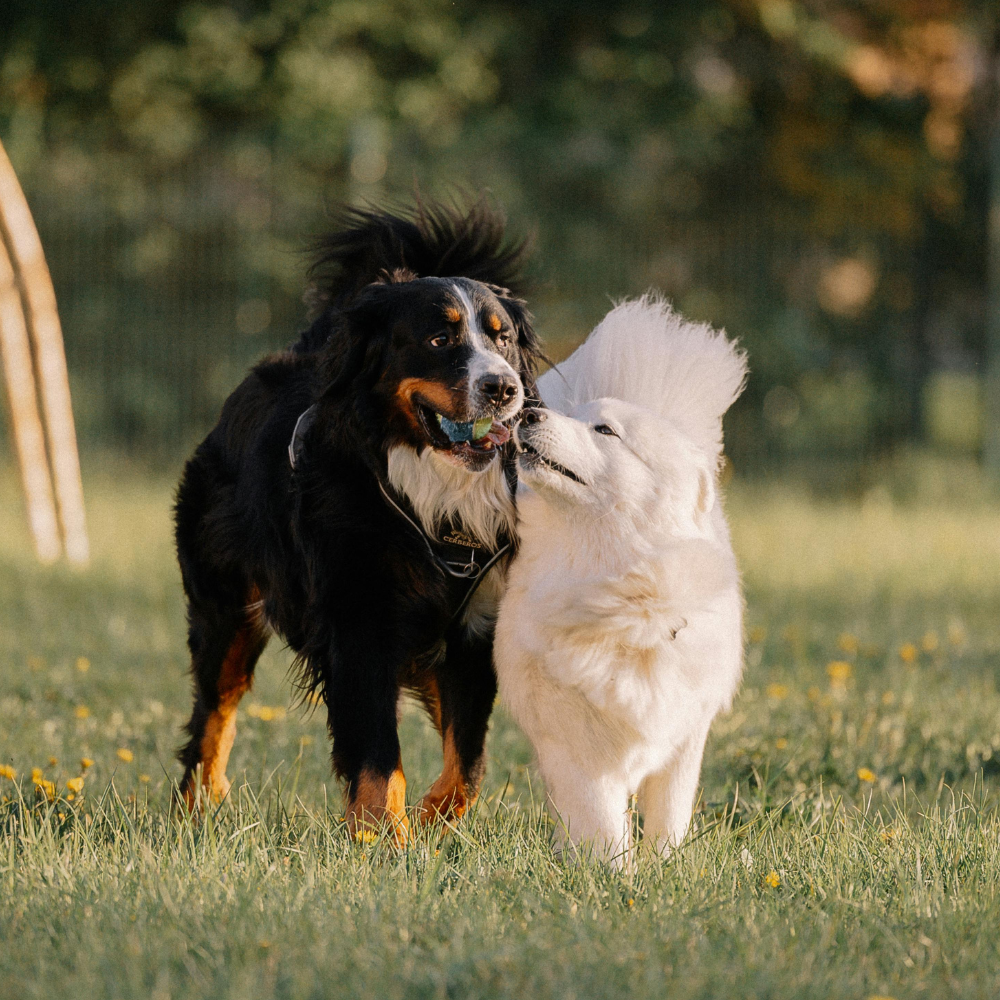
Our Canine Citizens mean the world!
Here is your guide to our canine-friendly community spaces, and the dogs they are best suited for.
We are big advocates for letting dogs be dogs where-ever it is safe. However, it’s also important to respect other users of the space that are there now, or who might come after you.
We hope to offer a new way to observe and consider your dog’s social preferences, and to highlight that dogs can live healthy, happy lives, whatever their sociability. If at any stage you are unsure about your dog’s sociability, it is best to err on the side of caution and avoid an interaction. We recommend you contact a qualified force free trainer to learn more about what your dog might need or the best ways to use our shared public spaces safely.
Please note: Dog behaviour and social interactions are varied and complex - these are just examples of different ways your dog may prefer to interact (or not) with other dogs in our public spaces. Our shared public spaces are always changing with people and their dogs coming and going - this information is intended to support dog owner decision making regarding outings with their dogs, and should be taken in context of what is happening in each environment on the day.
STEP 1 — how sociable is your dog?
Did you know: dogs can be best friends with the dog they live with and still be ‘solitary’ or ‘selective’ dogs? These labels refer to your dog’s preferences to interact (or not) with other dogs (especially unfamiliar ones) in public spaces. Assuming a dog loves all dogs because they live with one would be the same as assuming a person is an extravert because they grew up with a sibling.
Solitary dogsPrefer to have their own space away from other dogs or perhaps people. Some dogs just prefer the company of their people (and that's okay, but it's important we manage them carefully in public). | Socially selectiveAre very selective of the dogs they like to interact with. They likely have one or two good friends and prefer to avoid all other unfamiliar dogs — especially if they invade their personal space. | Socially tolerantGenerally social dogs but they may have preference for sizes or play styles, aren't able to adapt their play style to what other dogs prefer, or have a general amount of time they can play before things spiral out of control. | Highly social dogsConfident, sociable adolescent / adult dogs that get along with, and can adapt their play to, all sizes, sexes and breeds of dogs. |
A special note for socially selective and solitary dogs
Pick your times to attend our shared public spaces carefully. These spaces may be suitable for your dog depending on their comfort levels and how far away other dogs or people need to be for your dog to relax. Choose locations with ample space and multiple exits/ pathways to ensure you always have options to move away if the situation changes to prevent your dog becoming too stressed.
You can find out more about the dog sociability spectrum here.
STEP 2 — the basics checklist
- Lead: Max 2m (we don't recommend retractable leads – here’s why)
- Poo bags: Bring your own. Dispensers are for emergencies
- Supervision: Always watch your dog, even on lead
- Water: Keep your dog hydrated
- On-lead rules: Dogs must be on lead on footpaths, roads, near playgrounds (within 5m), during organised sport, and on the foreshore 10am–8pm in daylight savings
- Treats: Reward good behaviour around distractions
- Comfort: Bring a mat or shade if staying a while
- Effective control: Dogs can be off-lead only if close by, in sight, and under voice control learn more
STEP 3 — choose the right space to take your dog
Click the orange icons to learn more about how that space might work for you and your dog.
 = Reserves, key locations
 = Trail and walks