Learn more on our vision to nurture an extensive, healthy, diverse and sustainable urban forest which grows to reach a City wide canopy target of 25% by 2045.
Our Tree Canopy Improvement Strategy provides a framework to deliver long-term, sustainable, and significant gains to the urban forest. It contains 42 actions in total and you read more about these actions in the Strategy document, below.
Our vision is to nurture an extensive, healthy, diverse and sustainable urban forest which grows to reach a City-wide canopy target of 25% by 2045.
We will achieve this vision by increasing resources with a dedicated focus on planting more trees, whilst maintaining, protecting and retaining our existing trees, and engaging our community to enable action to protect and retain trees in both the public and private realm.
Our GROWING GREEN Principles Underpinning the Strategy
- Plant more trees
- Have a plan and set a target
- Protect more trees
- More tree maintenance and management
- Appreciate trees more
- Monitor and evaluate our progress (and change course if we need to)
Our City is getting hotter from the impacts of climate change and the urban heat island effect. Trees provide shade and cooling benefits, reduce heat-related illness, reflect heat and actively cool and clean the air. People need trees for their health and mental well-being. Trees are valued for their inherent beauty and for the associated aesthetic benefits they provide to homes, streets and suburbs, and are critical for urban biodiversity.
Planting trees is an investment in the future of our City. The mature trees we enjoy today and benefit from today, were planted by those generations before us, many decades ago.
To support our target of 25% tree canopy cover across the City of Charles Sturt by 2045, we have established an extended and intensive tree planting program over many decades. This is an ambitious target and one that we are keen to lead, but we will also need to work with residents, landholders, businesses and developers to get there. A lot of land within our Council area is privately owned.
We can achieve 25% by 2045 if we work together to GROW our tree canopy cover. We look forward to working with everyone in our community to achieve this goal.
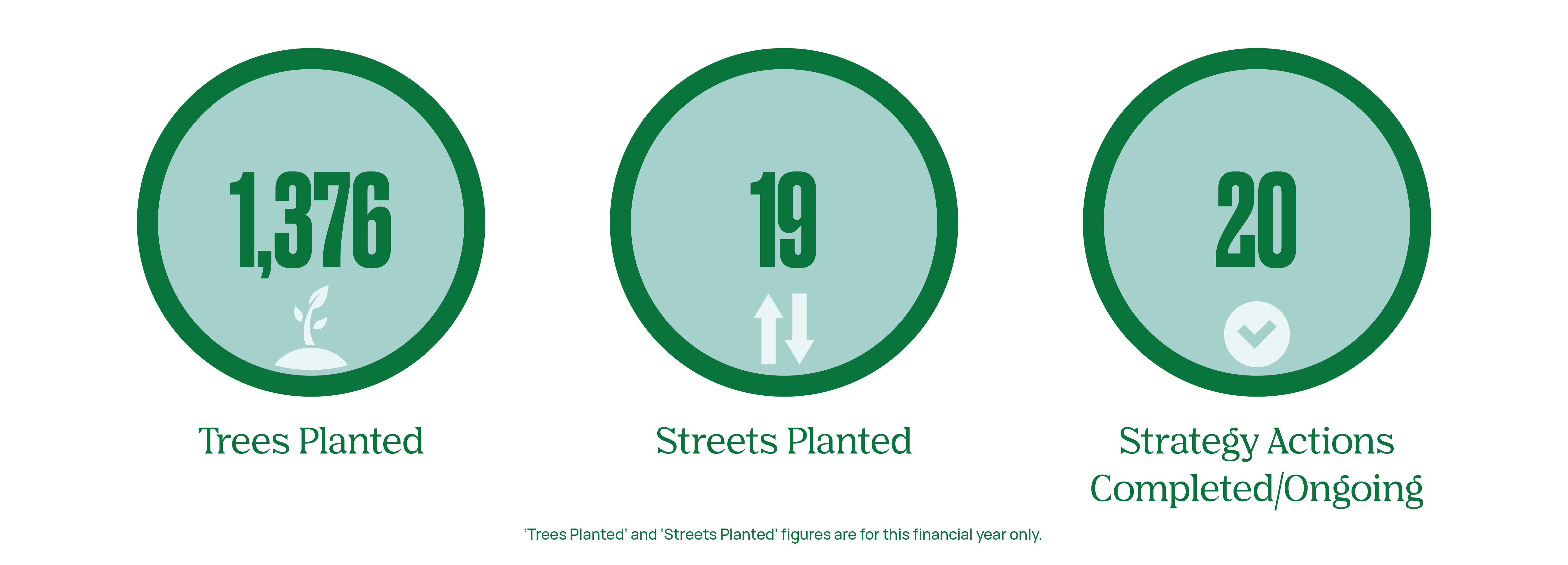
| Financial Year | Trees Planted | Streets Completed |
|---|---|---|
| 2025-2026 | 5,281 | 239 |
| 2024-2025 | 5,224 | 294 |
Frequently Asked Questions
Tree Canopy cover is the amount of cover the crown of the tree provides over an area of land when seen from above. It is usually expressed as a percentage of or square metres. As an individual tree grows and the crown expands, the canopy cover increases. When all the trees in an area such as a Council are measured, this gives us the tree canopy cover measure of a City.

Because overall tree canopy is in decline and we need a Tree Canopy Improvement Strategy that will provide a planned approach to arrest this decline and help us reach our target of 25% cover by 2045.
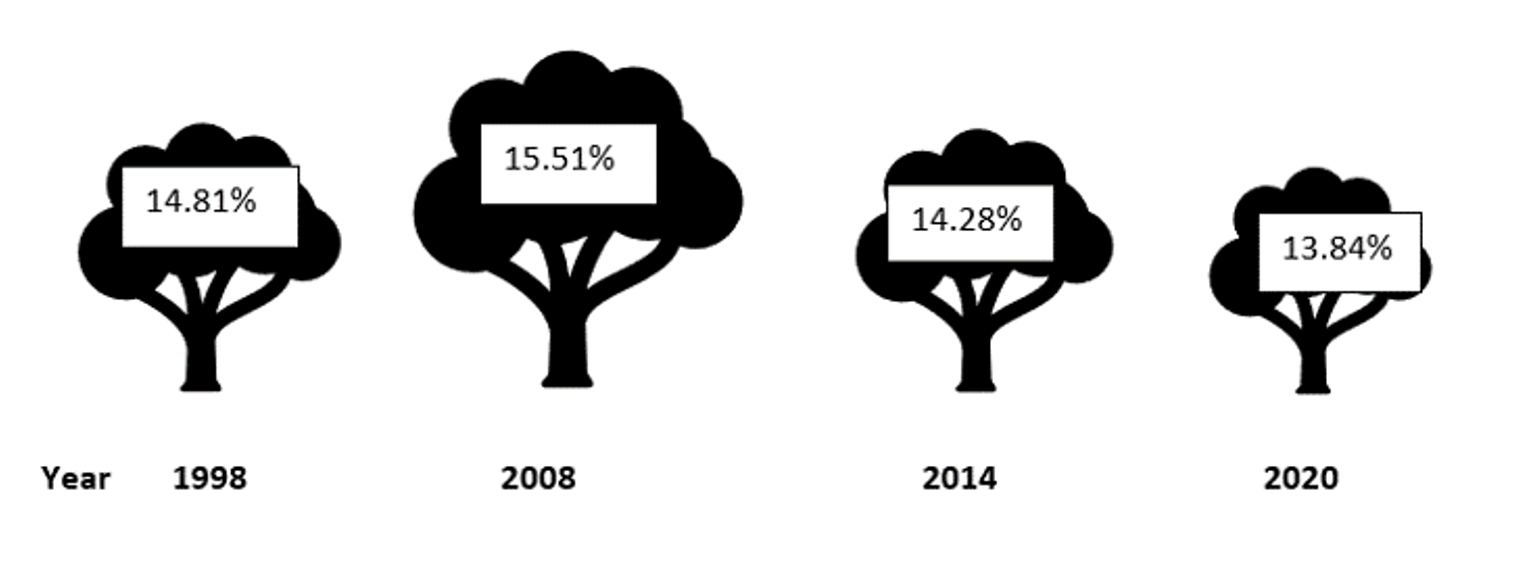
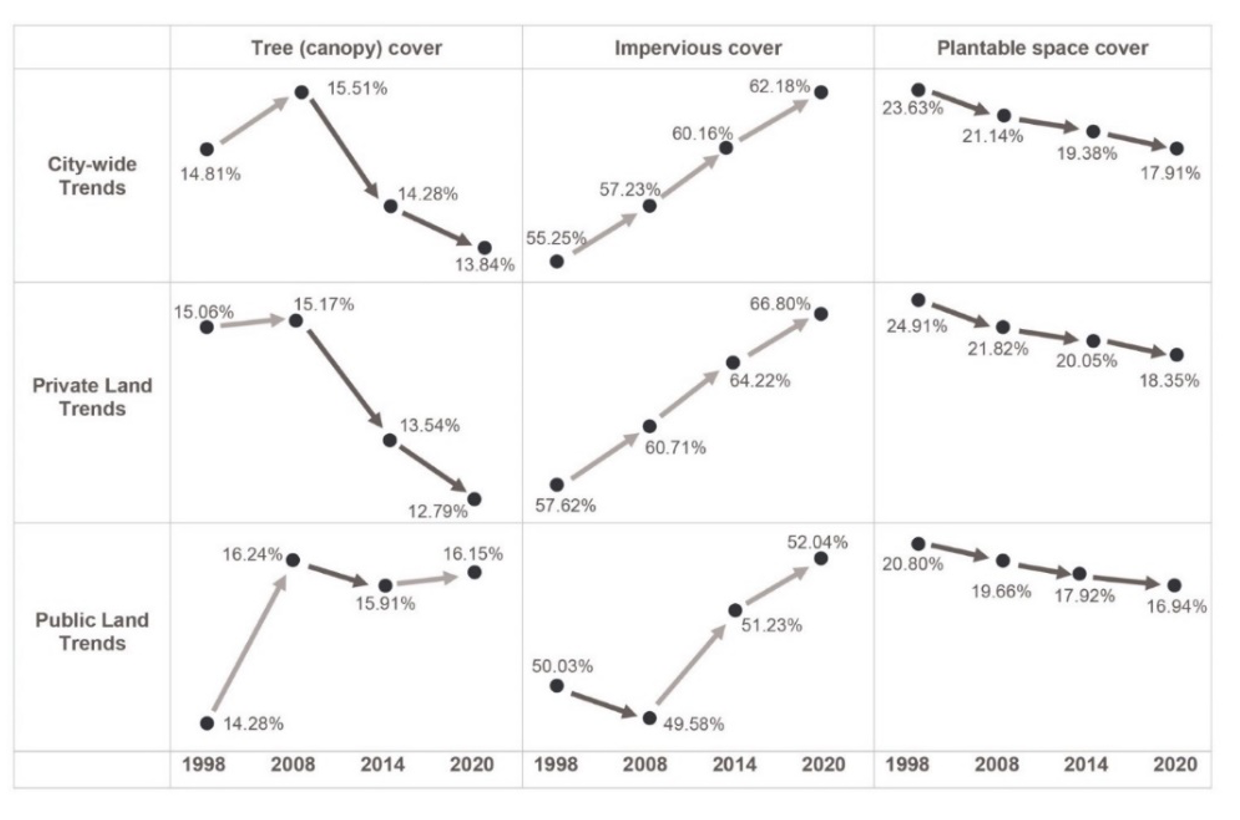
The diagram below shows that the City's tree canopy cover had decreased from a peak of 15.51% in 2008 to 13.84% in 2020. Our tree canopy cover is currently lower than most local government areas in metropolitan Adelaide.
The chart below demonstrates how our City has changed over time. We have measured the changes on private and public lands which, when combined, gives us a City-wide measure.
The three categories are:
- Tree canopy cover - this is the measure of how much of the land is covered by trees;
- Impervious cover - this is the measure of how much of the land is covered by buildings, driveways, paved courtyards, footpaths and roads; and
- Plantable space cover - this is the measure of how much of the land could be planted with trees.
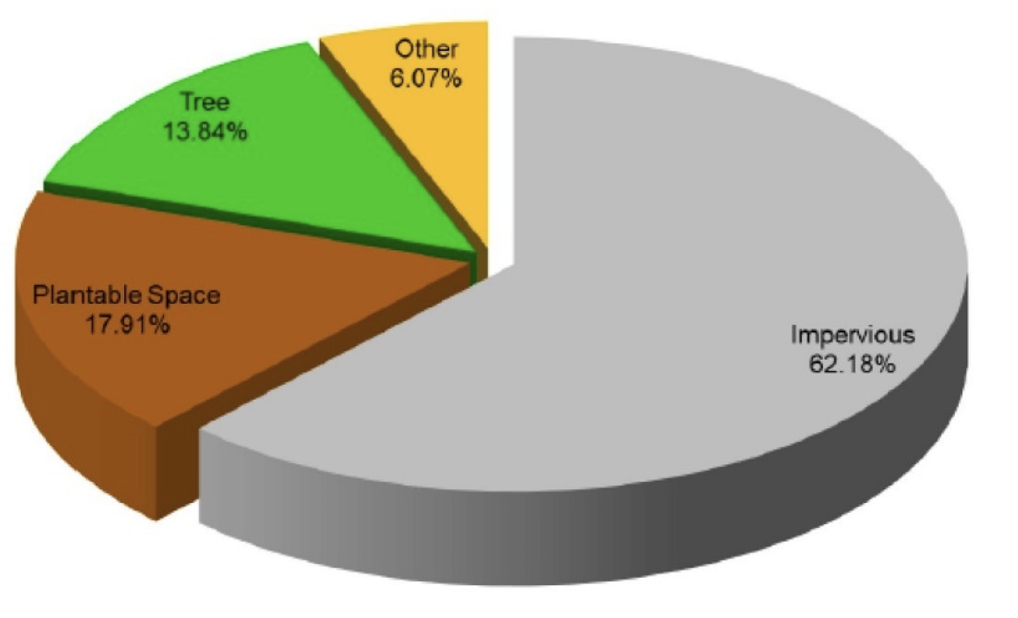
This pie-chart shows how the City is covered by proportions of cover types.
With almost two-thirds of the City being impervious, this has impacts in relation to heat and stormwater.
Impervious surfaces tend to absorb heat during the day and radiate this heat at night, leading to urban heat islands. Impervious surfaces also act as a barrier to rain settling into the ground, and shed this water into the stormwater system, sometimes causing localised flooding. When we plant more trees and increase canopy cover, this cools down the City and intercepts falling rain, lessening the effects caused by impervious surfaces.
Tree Canopy Cover in the City of Charles Sturt: 2020 Update
Report for City of Charles Sturt delivered by EDGE Environment in March 2021
City of Charles Sturt Tree Cover by Suburb, 2020
Table listing tree cover, impervious cover and plantable space cover over public and private land by suburb.
Benchmarking Australia's Urban Tree Canopy: An i-Tree Assessment, Final Report, 2014
The national benchmarking study by the Institute For Sustainable Futures in May 2014. This study 'kicked off' the need to closely monitor tree canopy cover.