Help us celebrate beautiful trees across our City through our Tree of the Month campaign.
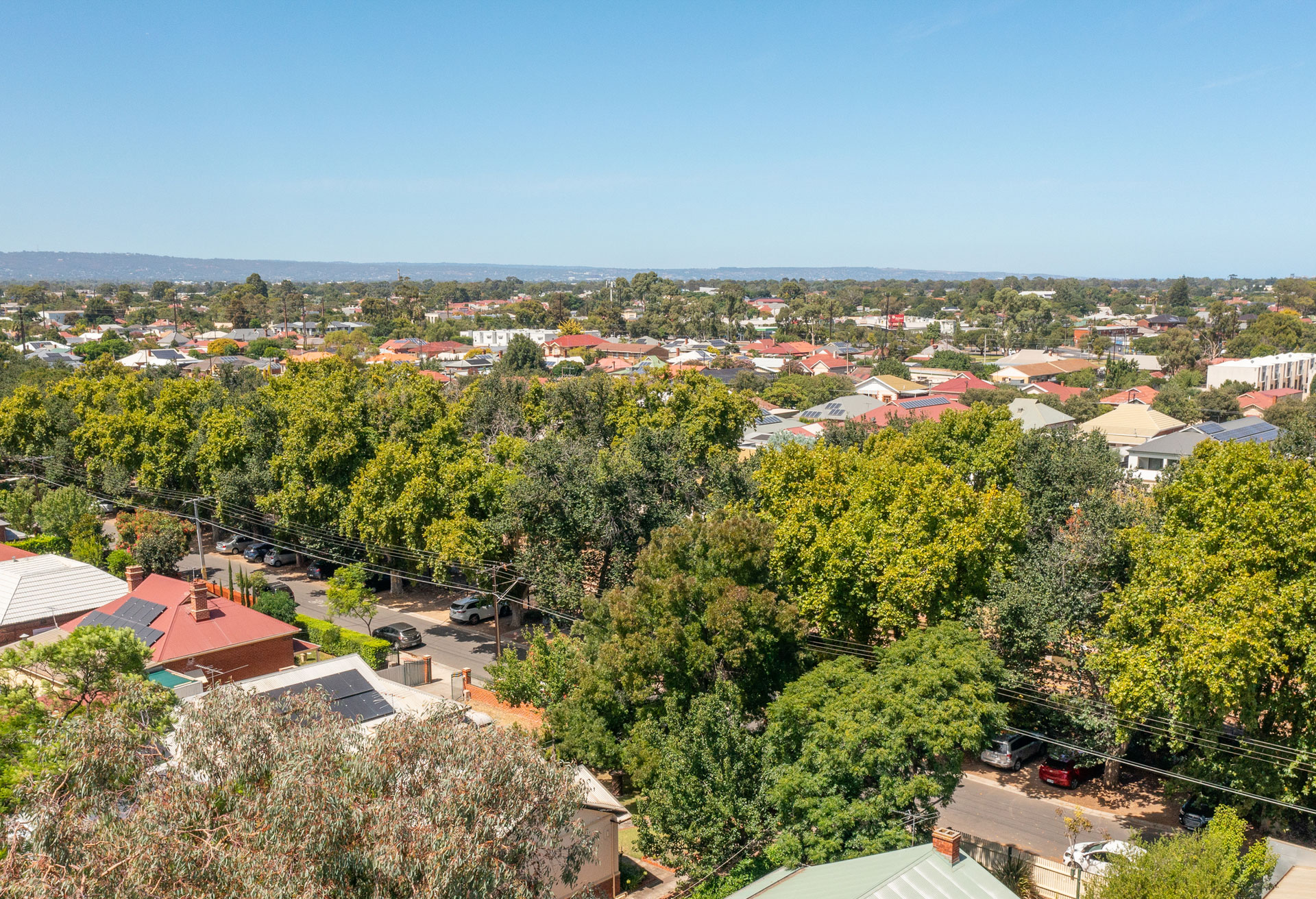
Our Tree of the Month campaign shines a spotlight on the wonderful array of trees we have in our community.
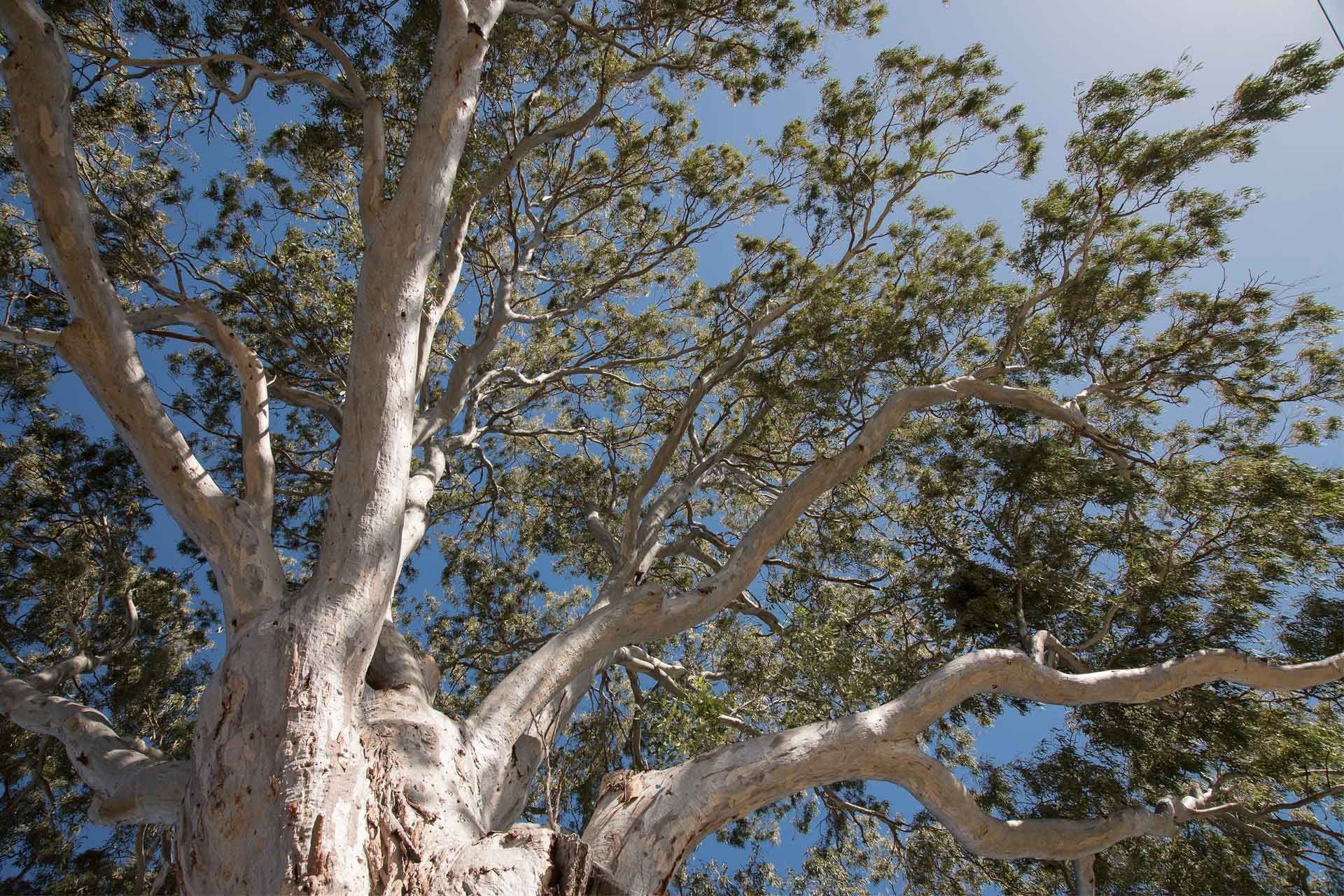
From towering gums which have stood for generations to smaller trees that bring shade, habitat and life to our streetscapes, each tree plays a valuable part in shaping our City.
Each month from July 2026, we'll highlight a tree (or set of trees) to celebrate their environmental, cultural and community value.
By sharing our tree species and stories, we aim to build a greater appreciation of the role trees play in cooling our suburbs, supporting biodiversity and creating greener, more liveable spaces for everyone.
You can get involved too.
Complete the form below to nominate your favourite neighbourhood tree and tell us why it matters to you and the community.
It could be a local landmark, a quiet spot for reflection, or simply a tree you love and appreciate. Your nominated tree could then feature as a future 'Tree of the Month'.
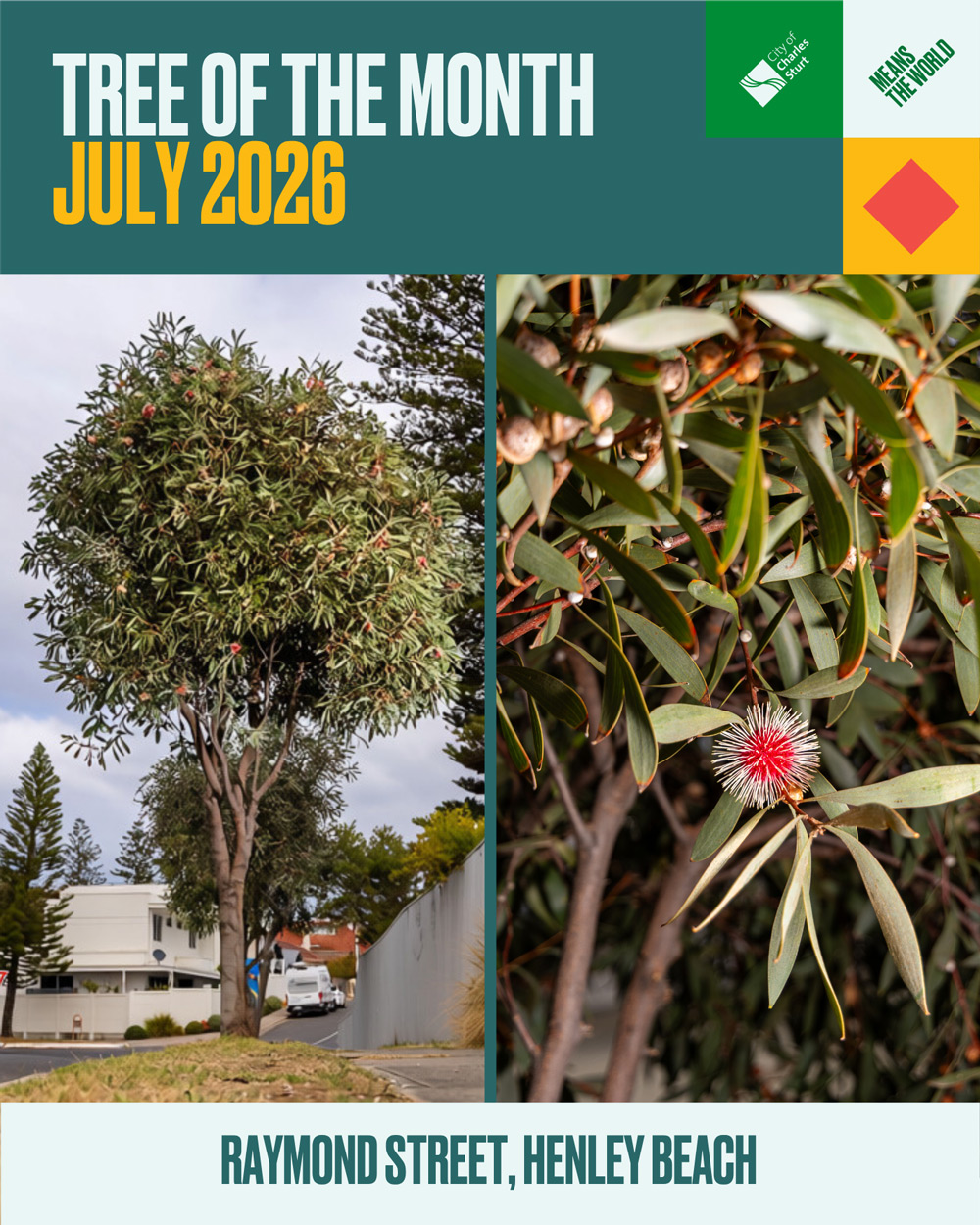
Pin Cushion Hakea (Hakea laurina) - Raymond Street, Henley Beach
This unique native tree is perfectly suited to our coastal environment and thrives in the salty breezes and sandy soils of Henley and Adelaide's western suburbs. The tree blooms with distinctive deep pink and cream flowers that resemble pin cushions to create a stunning display during the cooler months.
Beyond its beauty, the Pin Cushion Hakea plays an important role in supporting local biodiversity with its nectar-rich flowers providing a valuable food source for birds, bees and other pollinators. Its dense foliage offers shelter for native wildlife too.
Keep an eye out for trees like these next time you’re walking through our coastal suburbs.
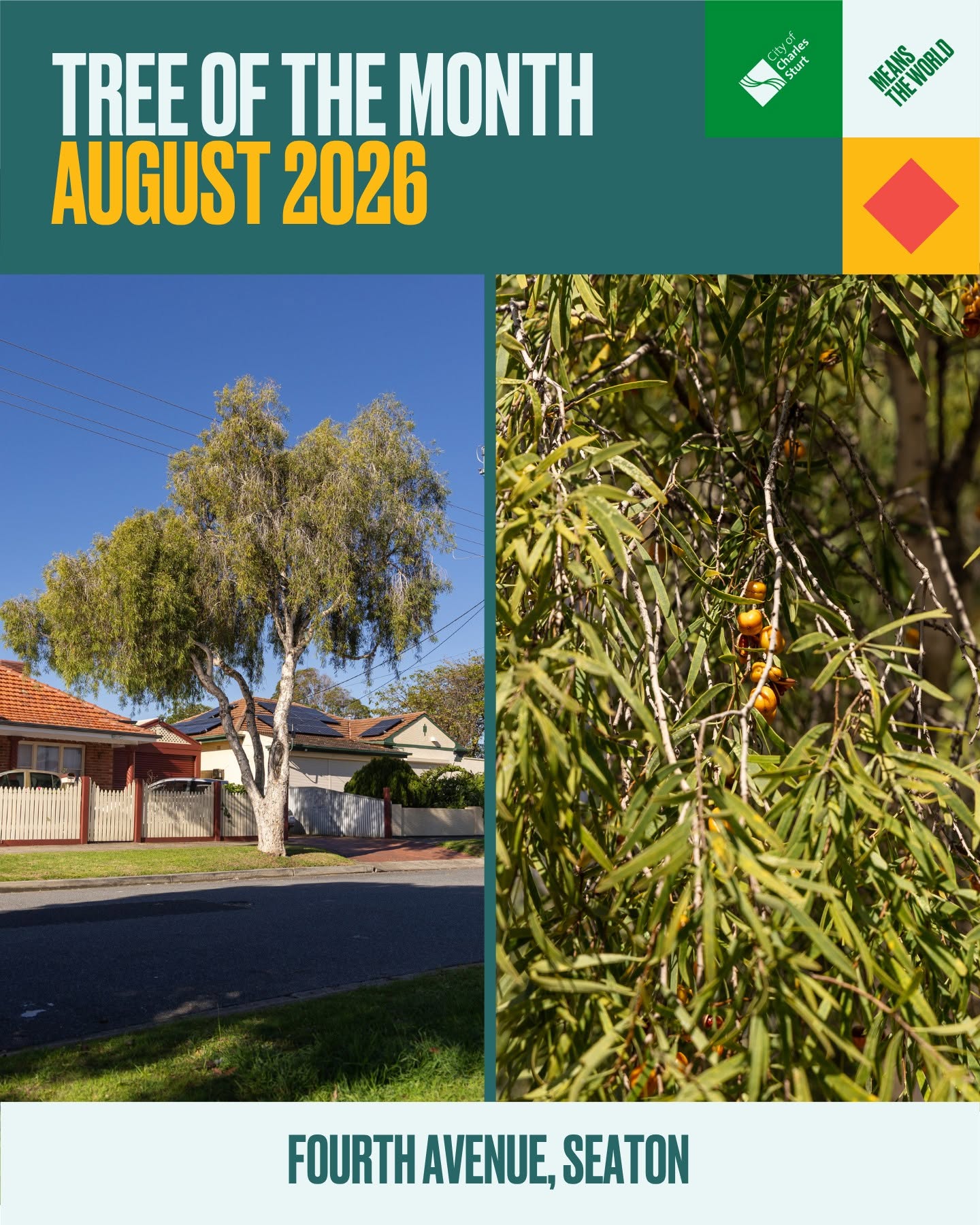
Native Apricot (Pittosporum angustifolium) - Fourth Avenue, Seaton
The ornamental Native Apricot is known for its weeping form and fragrant yellow flowers. It is well-suited to South Australia's climate with a high tolerance to drought, frost, and a natural resistance to high winds.
This species supports local biodiversity with its flowers attracting birds, bees and butterflies, and helping provide food and habitat for a range of pollinators and native wildlife.
Various parts of the tree, including its fruit, leaves and wood, have also been used in traditional medicine by some First Nations peoples to treat ailments including colds, coughs, pain, cramps, eczema and itching.
Look out for these Native Apricot trees next time you're exploring our local parks and streets. You may be surprised by how many are quietly thriving in our neighbourhoods.
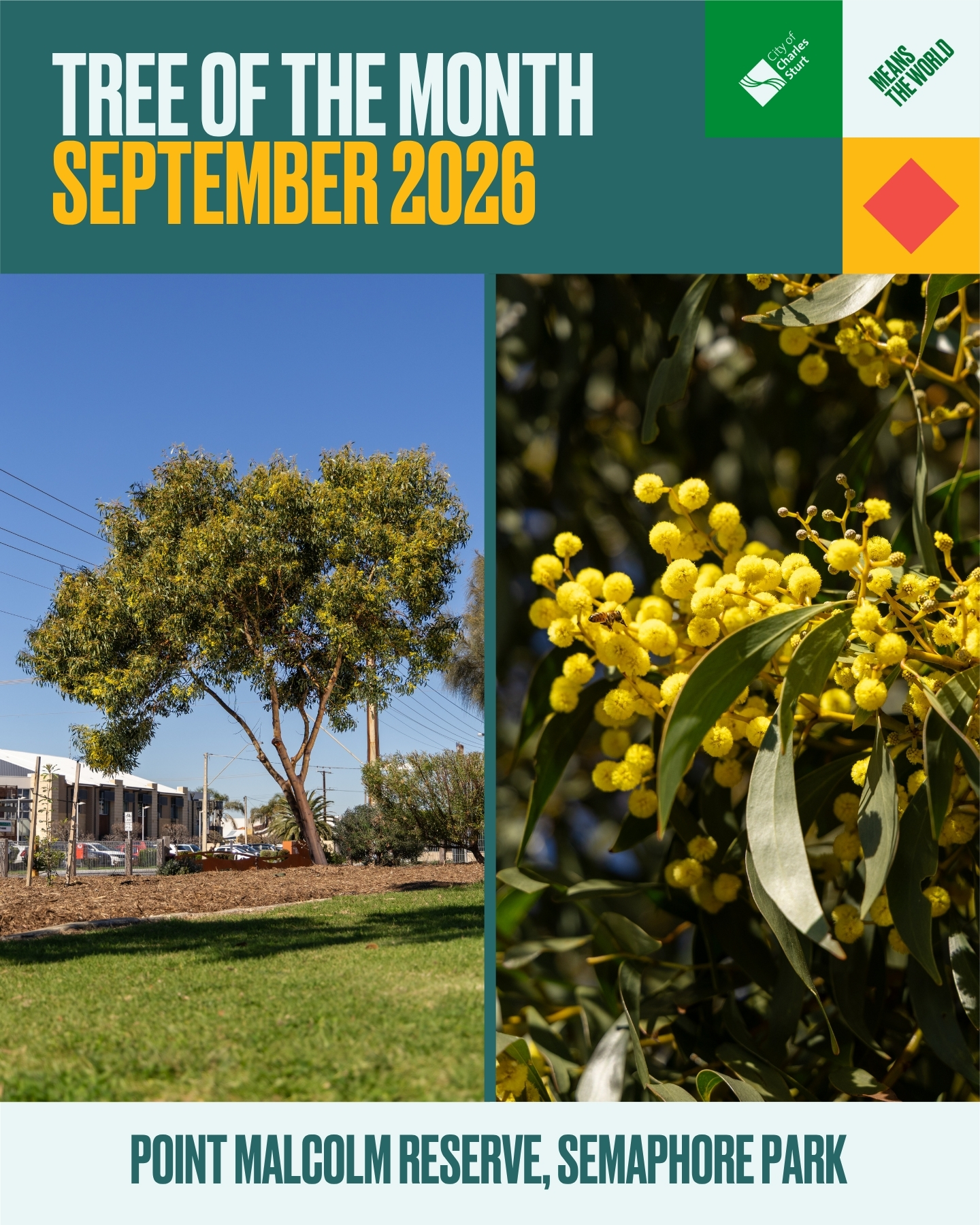
Golden Wattle (Acacia pycnantha) – Point Malcolm Reserve, Semaphore Park
The Golden Wattle is Australia's national floral emblem and loved for its brilliant golden blooms that brighten the landscape in late winter and spring. These fragrant flowers also provide an important source of food for birds, bees and other pollinators.
Its vibrant green and gold foliage helped inspire our national colours, representing unity, resilience, and the spirit of the Australian people.
1 September is National Wattle Day, marking the first day of spring and celebrating this iconic species and the important place it holds in Australia's history, identity and landscape.
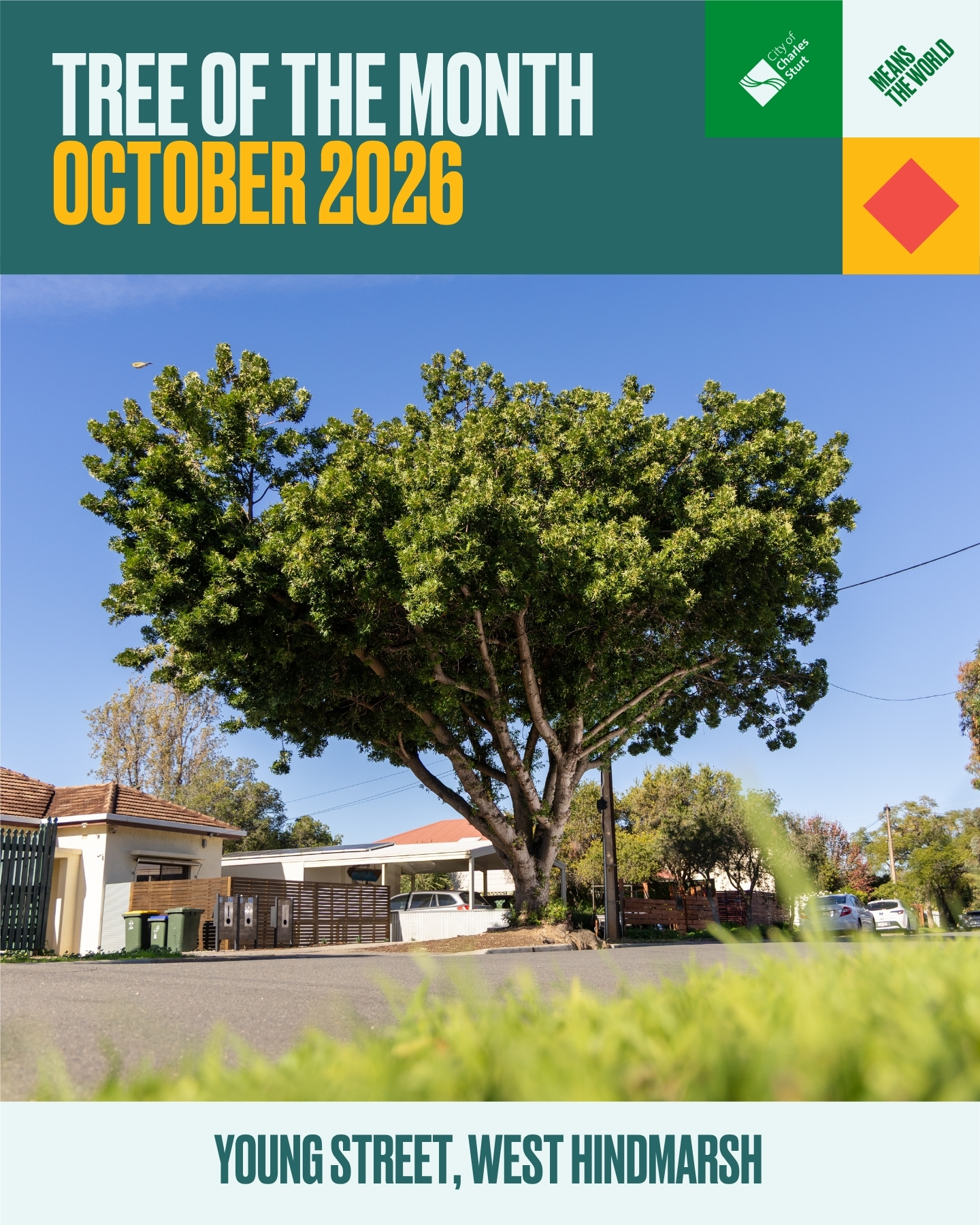
South African Wild Plum (Harpephyllum caffrum) - Young Street, West Hindmarsh
This unique tree is known for its broad, domed canopy and dense foliage which makes it an outstanding shade tree. New leaves emerge with a reddish hue before maturing to a glossy dark green which adds vibrant colour to our neighbourhoods.
This species is well suited to life in Adelaide, thriving in coastal conditions and with high drought tolerance. In summer it produces clusters of yellow-green flowers, followed by plum-like fruit that can even be made into jam.
Its wide canopy, beauty and resilience make it a valuable addition to our streets and open spaces.
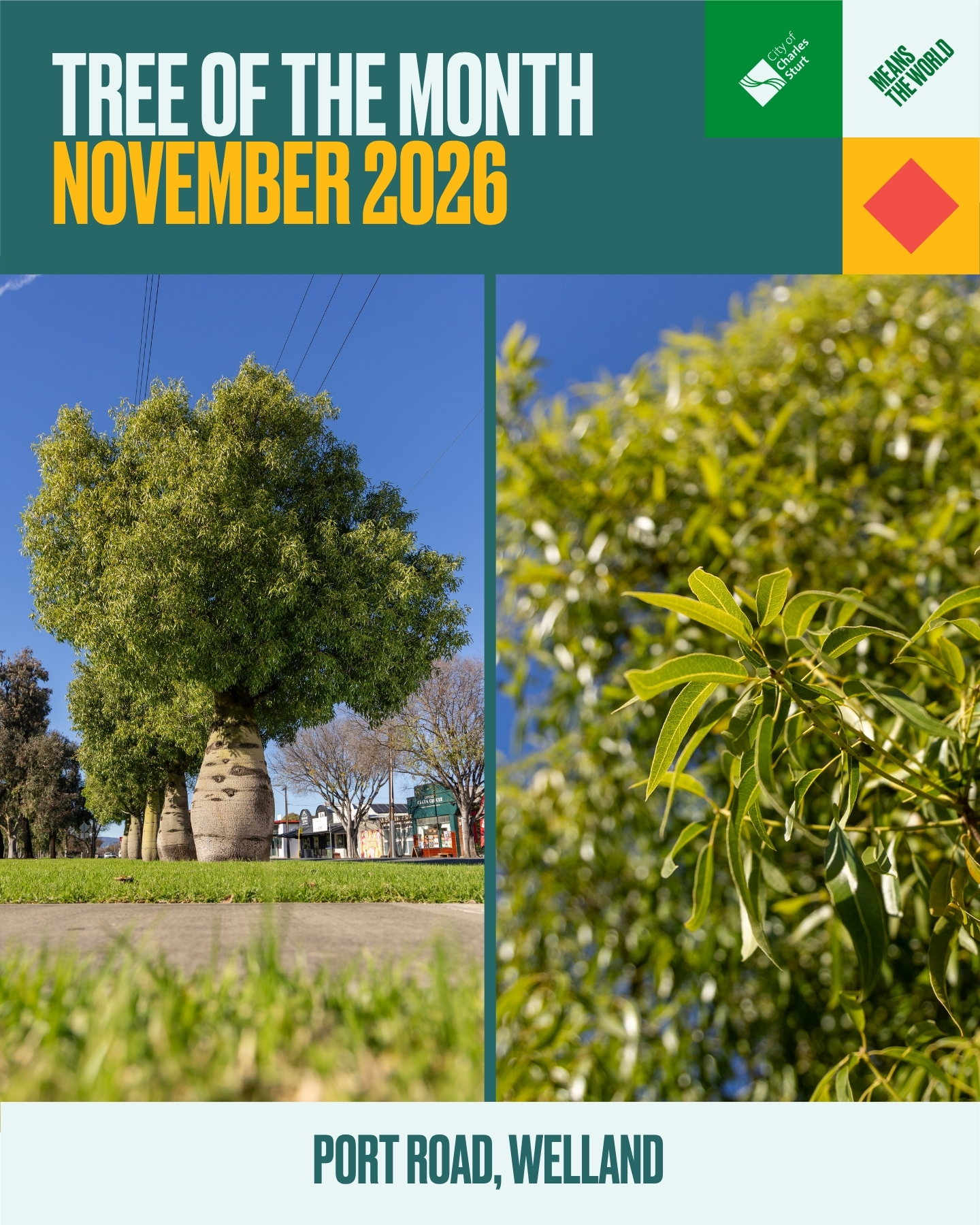
'Bottle Tree’ (Brachychiton rupestris) – Port Road, Welland
This tree is a unique Australian native species you’ll see growing in a stand within our Port Road median at Welland.
It’s easy to see where the Bottle Tree gets its name. As it matures, the trunk develops a distinctive swollen, bottle-like shape as it stores water to help the tree in dry periods.
It can grow up to 20 metres in height but is generally smaller in size in cooler climates. In spring, it produces clusters of small, bell-shaped, yellowy flowers.
The tree is a close relative of the spectacular Illawarra Flame Tree. Despite looking completely different, they are from the same botanical genus.
There’s another small stand of Bottle Trees located at the intersection of Stonehaven Street and Price Avenue in Pennington which are much adored by the local community.